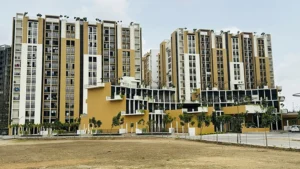
Buying your first home is an exciting milestone, but it also comes with important financial and legal decisions. Whether you are planning to move into your own apartment, purchase a home for your family, or invest in residential property, choosing the right flat requires more than comparing prices and amenities.
Vapi attracts homebuyers with different requirements, including people looking for convenient access to workplaces, families seeking larger apartments, and buyers comparing residential options across the wider Vapi region. However, the right property depends on your budget, preferred location, daily commute, family needs, and long-term plans.
If you are exploring properties in Vapi, you will likely come across several options, from compact apartments to spacious family homes. Choosing between a 2 BHK in Vapi and a 3 BHK in Vapi is only one part of the decision. You must also examine the total purchase cost, construction quality, legal documentation, project registration, loan eligibility, and future maintenance expenses.
This guide provides a practical checklist for buying your first flat in Vapi. It covers what to verify before booking, what to inspect during a site visit, which documents to review, and how to avoid common mistakes.
The objective is simple: help you make an informed decision rather than rushing into a purchase because of an attractive advertisement or limited-period offer.
1. Define Your Homebuying Requirements Before Searching
Before browsing property listings, identify what you actually need from your first home. A clear set of requirements will help you shortlist suitable properties and avoid wasting time on apartments that do not fit your lifestyle.
Decide why you are buying the property
Start by identifying your primary objective.
- For self-use: Prioritize daily convenience, commute, neighbourhood facilities, apartment layout, and long-term comfort.
- For a growing family: Consider additional bedrooms, storage, parking, children’s needs, and access to schools and healthcare.
- For investment: Evaluate rental demand, resale considerations, ongoing costs, and the property’s suitability for the intended tenant or future buyer.
A property that works well for an investor may not necessarily be the best choice for a family planning to live there for many years.
Prepare a list of essential requirements
Before visiting residential projects in Vapi, write down your priorities.
- Preferred locality and maximum commuting time.
- Required number of bedrooms.
- Minimum acceptable carpet area.
- Parking requirements.
- Lift, security, and other essential facilities.
- Proximity to schools, hospitals, shops, and public transport.
- Ready-to-move or under-construction preference.
- Maximum budget, including additional costs.
Separate your requirements into three categories: essential, desirable, and optional. This makes it easier to compare flats in Vapi objectively.
2. Set a Realistic Budget for Properties in Vapi
The advertised price is not always the total amount you will spend on a property. First-time homebuyers should calculate the complete acquisition cost before deciding which apartments they can afford.
Understand the complete purchase cost
When comparing properties in Vapi, ask for a written cost sheet that explains the applicable charges.
| Expense | What to check |
| Basic flat price | Agreed property price and area basis |
| Stamp duty and registration | Applicable charges and payment requirements |
| GST | Whether applicable to the particular transaction |
| Parking | Whether included or charged separately |
| Maintenance deposit | Advance maintenance and common-area charges |
| Society or other deposits | Applicable charges and supporting details |
| Legal and loan costs | Lawyer fees, processing fees, and other charges |
| Interior work | Kitchen, wardrobes, electrical fittings, and furnishing |
| Moving and setup | Shifting, utility connections, and initial expenses |
The applicability and amount of each charge depend on the property, transaction, and prevailing rules. Ask the developer or seller for a complete written breakdown and independently verify significant charges.
Keep money aside for emergencies
Avoid using all your available savings for the down payment. Maintain a separate emergency reserve for household expenses, unexpected repairs, medical needs, or temporary income disruption.
Also account for your existing EMIs and other financial commitments before deciding on a home loan.
Practical tip: Compare properties based on their estimated total acquisition cost, not just the advertised base price. A seemingly cheaper flat may become more expensive once additional charges and essential interior work are included.
3. Should You Buy a 2 BHK or 3 BHK Flat in Vapi?
One of the most common decisions for first-time homebuyers is choosing between a two-bedroom and a three-bedroom apartment.
The right configuration depends on the household’s needs, budget, usable space, and how long the family plans to stay in the property.
When should you consider a 2 BHK in Vapi?
A 2 BHK apartment may suit couples, small families, or buyers who want to manage their purchase budget carefully.
Potential advantages include:
- Lower purchase cost than a comparable larger apartment.
- Potentially lower furnishing and maintenance expenses.
- Easier space management for smaller households.
- More flexibility to maintain savings after purchasing the home.
When comparing a 2 BHK in Vapi, check the carpet area, bedroom dimensions, kitchen layout, ventilation, storage, and whether the living area can accommodate your furniture comfortably.
Do not assume every two-bedroom apartment provides the same usable space simply because the configuration is identical.
When should you consider a 3 BHK in Vapi?
A 3 BHK apartment may be appropriate for larger families, people who need a dedicated work-from-home room, or households expecting their space requirements to increase.
Consider these factors:
- Whether the third bedroom will serve a practical purpose.
- Whether the additional cost is manageable without financial stress.
- Whether the larger apartment has a suitable layout and adequate storage.
- Whether the extra space justifies potentially higher furnishing and maintenance expenses.
A 3 BHK in Vapi may provide greater flexibility, but it is not automatically a better purchase than a smaller apartment.
How to compare 2 BHK and 3 BHK flats fairly
Compare the carpet area, layout efficiency, price, total monthly ownership costs, and location. Ask for floor plans and measure important room dimensions during your visit.
A well-designed 2 BHK can be more practical than a poorly planned 3 BHK. Choose the configuration that meets your needs rather than purchasing an additional bedroom simply because it appears to offer better value.
4. Choose the Right Location for Your Lifestyle
The location of a flat affects everyday convenience, commuting costs, access to essential services, and the property’s suitability for future buyers or tenants.
When evaluating properties in Vapi, assess the actual location instead of relying only on the distance mentioned in a brochure.
Check workplace connectivity
If you work in or around Vapi’s industrial and commercial areas, calculate your likely commute during normal working hours. Visit the property during peak traffic periods where practical.
Check the actual travel time to your workplace, railway station, frequently used roads, and other destinations that matter to your household.
Evaluate nearby facilities
Inspect the availability and accessibility of:
- Schools and childcare facilities.
- Hospitals, clinics, and pharmacies.
- Grocery shops and supermarkets.
- Banks, restaurants, and daily services.
- Public transport and major roads.
- Parks and recreational facilities.
Verify important distances yourself. A facility described as nearby in an advertisement may not be convenient for your daily routine.
Visit the area at different times
A residential area can feel very different in the morning, evening, and late at night.
Check road access, traffic, noise, street lighting, drainage, waterlogging concerns, and the surrounding land use. Ask residents about recurring maintenance or infrastructure issues where possible.
Also examine the approach road and the immediate surroundings of the building. These details can influence your everyday living experience long after the initial excitement of buying a home has passed.
5. Verify the Builder and Project Before Booking
The developer’s track record and the project’s documentation deserve as much attention as the apartment itself.
Before booking a flat, research the builder’s completed projects, construction quality, delivery history, and reputation for addressing customer concerns.
Examine the developer’s previous projects
If possible, visit an older completed project by the same developer.
Observe the condition of common areas, lifts, external walls, parking spaces, and amenities. Speak with existing residents about maintenance, construction issues, promised facilities, and how the developer handled complaints.
Online reviews can help identify questions to investigate, but do not rely on reviews alone. Look for patterns and verify important claims independently.
Check the project’s RERA registration
For projects that require registration under the applicable real estate regulations, verify the details through the official Gujarat Real Estate Regulatory Authority portal: GujRERA.
Check the project’s registered name, registration number, promoter details, declared completion timeline, and available disclosures. Confirm that the project you are visiting corresponds to the registered project.
A registration number displayed in a brochure should not be accepted without verification.
RERA registration is an important due-diligence step, but it does not replace independent title checks, legal review, or physical inspection.
Confirm the promised amenities
If the developer advertises a clubhouse, gym, children’s play area, landscaped gardens, or other amenities, ask where these facilities will be located and whether they are included in the approved plans and agreement.
Clarify whether amenities will be ready at possession or delivered later. Confirm the applicable maintenance arrangements and any additional charges.
Do not assume that every feature shown in a promotional rendering is contractually guaranteed.
6. Check Property Documents Before Paying a Booking Amount
Legal verification is one of the most important steps when buying your first flat. A visually attractive apartment does not establish that the seller has the necessary rights or that the project complies with applicable requirements.
Ask an independent property lawyer to examine the documents relevant to the specific transaction.
Important documents to verify
Title and ownership documents: Confirm that the seller or developer has the legal right to sell the property and that the title history is satisfactory.
Encumbrance and loan-related records: Investigate registered charges, mortgages, claims, and other relevant encumbrances. The appropriate checks depend on the property and transaction.
Approved building plans: Check the applicable sanctioned plans and whether the proposed construction corresponds to the approved documents.
Development and building permissions: Verify the permissions and certificates applicable to the project’s current stage.
RERA records: Where applicable, review the registration details, project disclosures, declared timelines, and available updates.
Agreement for sale: Review the flat identification, carpet area, total price, payment schedule, possession terms, cancellation provisions, and other contractual obligations.
Completion or occupancy documentation: For a completed building, check the applicable completion or occupancy certificate and whether it covers the relevant building or unit.
Property tax and utility records: Review relevant dues, utility arrangements, and other records where applicable.
The exact documents required depend on whether you are buying a new apartment directly from a developer, purchasing a resale flat, or buying a property that is still under construction.
Do not rely solely on the builder’s assurances or the bank’s loan approval. A lender’s checks are not a substitute for independent legal advice.
For regulatory information, consult the official Gujarat RERA portal and the Real Estate (Regulation and Development) Act, 2016.
7. Inspect the Flat During Your Site Visit
Photographs, floor plans, and virtual tours are useful for shortlisting properties, but they cannot reveal every practical issue.
During your site visit, inspect the apartment carefully and ask specific questions.
Check construction quality
Look for visible cracks, uneven flooring, damp patches, water leakage, poorly finished corners, and damaged fittings. Check doors, windows, taps, electrical switches, and ventilation.
For an under-construction apartment, ask about the construction stage and which features will be delivered as part of the agreed specifications.
For a ready-to-move property, consider arranging a professional inspection if you are unsure about the condition of the building.
Examine the layout and natural light
Stand in each room and assess its usable space. Check whether beds, wardrobes, kitchen appliances, and other furniture will fit comfortably.
Observe natural light, cross-ventilation, window placement, privacy, and noise from nearby roads or common areas.
A larger carpet area is useful only if the layout supports your needs.
Check water, drainage, and utilities
Ask how the property receives water, how water shortages are managed, and whether backup arrangements are available.
Check drainage, bathroom ventilation, electrical provisions, internet availability, and power backup arrangements where applicable.
Ask about the building’s maintenance procedures and who is responsible for repairs before and after possession.
8. Understand Carpet Area, Built-Up Area, and Super Built-Up Area
Area measurements can make property comparisons confusing, especially for first-time buyers.
Under RERA, carpet area has a defined meaning and generally refers to the net usable floor area of an apartment, excluding external walls, service shafts, exclusive balconies or verandahs, and exclusive open terraces, but including internal partition walls as specified by the Act.
Built-up area and super built-up area are different measurement concepts that may be used in property marketing or pricing.
Before comparing two flats in Vapi, ask the developer for the carpet area and the precise basis on which the quoted price is calculated.
Compare apartments using consistent measurements. Do not assume that two flats advertised with the same overall area will offer the same usable living space.
9. Evaluate Home Loan Eligibility and Monthly Affordability
Many first-time buyers rely on a home loan. Before paying a booking amount, estimate your eligibility and understand the financial commitment.
Compare loan offers
Review the interest rate, loan tenure, processing fees, repayment conditions, prepayment provisions, and applicable charges across lenders.
Use a home loan calculator to estimate your EMI under different interest rates and repayment periods. A longer tenure can reduce the initial EMI but may increase the total interest payable.
Also consider the possibility of future rate changes if the loan has a floating interest rate.
Check your overall financial position
Your home loan should fit comfortably alongside household expenses, existing EMIs, savings goals, and emergency reserves.
Account for the possibility of temporary income disruption or unexpected household costs. Do not rely on a future salary increase or uncertain rental income to justify an otherwise unaffordable purchase.
Ask the lender which documents are required and whether the property meets its financing conditions.
Important: Loan pre-approval does not automatically confirm that a specific property has a clear legal title or that every project document is satisfactory.
10. Understand the Agreement, Payment Schedule, and Possession Terms
Never sign a property agreement simply because the sales representative says that the terms are standard.
Read the agreement carefully and obtain legal advice if any clause is unclear.
Confirm the following:
- Exact apartment number, floor, configuration, and carpet area.
- Total consideration and itemized additional charges.
- Payment milestones and applicable conditions.
- Expected possession date and relevant contractual provisions.
- Specifications, fittings, parking, and promised amenities.
- Cancellation terms and refund conditions.
- Provisions relating to delays, defects, and dispute resolution.
- Responsibilities for maintenance, common areas, and outstanding dues.
Check that verbal promises are accurately reflected in the written agreement wherever they are intended to form part of the contract.
For applicable transactions, RERA provisions concerning agreements for sale and advance payments should be reviewed with your lawyer. Avoid making substantial payments before understanding the legal and contractual requirements.
11. Complete a Final Checklist Before Taking Possession
Once the purchase progresses to possession, inspect the apartment again rather than assuming that everything is ready.
Possession-day checklist
- Verify the apartment number and agreed specifications.
- Inspect walls, floors, windows, doors, and fittings.
- Test electrical points, switches, taps, and drainage.
- Check keys, access cards, and parking allocation.
- Confirm the status of applicable completion or occupancy documentation.
- Obtain relevant warranties, manuals, and handover documents.
- Clarify maintenance payments and utility arrangements.
- Record outstanding defects and agree on a written rectification process.
- Keep copies of the agreement, payment receipts, and possession documents.
- Understand the process for reporting defects after handover.
For an under-construction apartment, confirm that possession is being offered in accordance with the applicable approvals and contractual requirements.
For a resale flat, verify the seller’s outstanding dues, transfer procedures, and the documents required for the transaction.
12. Common Mistakes First-Time Homebuyers Should Avoid
Even buyers who conduct substantial research can overlook important details when they become emotionally attached to a property.
Choosing only on the basis of price: A low advertised price may not represent the lowest total ownership cost. Compare the complete cost and the property’s suitability.
Ignoring legal verification: Never assume that a property is legally sound simply because the developer is well known or a bank is willing to provide financing.
Stretching the budget: Avoid committing to an EMI that leaves insufficient money for household expenses and emergencies.
Rushing because of a sales offer: Evaluate the property, documents, and agreement before making a commitment.
Ignoring the surrounding area: Visit the neighbourhood and assess actual road access, noise, drainage, and everyday facilities.
Comparing apartments using inconsistent area figures: Ask for the carpet area and a clear explanation of the pricing basis.
Failing to document promises: Keep important commitments in writing instead of relying on verbal assurances.
Overlooking future needs: Consider how your family size, work arrangements, and lifestyle might change over the next several years.
Frequently Asked Questions About Buying a Flat in Vapi
1. What should I check before buying my first flat in Vapi?
Before buying a flat in Vapi, evaluate your budget, preferred location, carpet area, construction quality, developer’s track record, applicable RERA registration, legal title, approved plans, and total purchase cost. Review the agreement with an independent lawyer and inspect the property before making a final commitment.
2. How do I choose between a 2 BHK and a 3 BHK in Vapi?
Choose a 2 BHK in Vapi if it comfortably meets your household’s space requirements and helps maintain financial flexibility. Consider a 3 BHK in Vapi if you need an additional bedroom, workspace, or room for a growing family. Compare carpet area, layout, total cost, and ongoing maintenance rather than bedroom count alone.
3. What is the total cost of buying a flat in Vapi apart from the basic price?
The total cost may include stamp duty, registration charges, applicable GST, parking charges, maintenance deposits, legal fees, loan processing costs, interior work, and utility-related expenses. The exact charges depend on the transaction and prevailing rules. Request an itemized cost sheet before deciding your budget.
4. How can I verify whether a residential project in Vapi is RERA registered?
Visit the official Gujarat RERA website at https://gujrera.gujarat.gov.in/ and use its public search facilities to check the project details. Match the registered project name, promoter, registration number, and other available disclosures with the documents provided by the developer. Seek legal advice if the records do not match.
5. Which documents should I verify before booking a flat in Vapi?
Important documents may include title and ownership records, applicable encumbrance checks, sanctioned building plans, development permissions, RERA disclosures, the agreement for sale, and relevant completion or occupancy documentation. The precise requirements vary by property type and transaction, so have an independent property lawyer review the documents.
6. Is a ready-to-move flat better than an under-construction flat in Vapi?
A ready-to-move flat allows you to inspect the actual apartment and assess the completed building, subject to verifying the necessary documentation. An under-construction flat may offer a different payment schedule and choice of units but involves construction and delivery considerations. Compare the total cost, legal status, timeline, and your housing needs.
7. How can I check whether a 2 BHK flat in Vapi has enough carpet area?
Ask for the documented carpet area and a detailed floor plan. Measure bedroom dimensions, living space, kitchen, storage areas, and internal circulation. Check whether your furniture will fit comfortably. Compare carpet areas on a consistent basis rather than relying on a broad advertised area figure.
8. What should first-time homebuyers ask a builder before booking a flat in Vapi?
Ask about the total price, carpet area, payment schedule, applicable RERA registration, approved plans, possession timeline, construction specifications, parking, amenities, maintenance charges, and cancellation conditions. Request written clarification of any promised features and have the agreement reviewed before making a substantial payment.
9. How do I check whether a property in Vapi has legal or financial liabilities?
Ask a property lawyer to examine ownership records, the title history, relevant registered charges, mortgage information, and other documents applicable to the transaction. For a resale flat, also check outstanding dues and transfer requirements. No single document or online search should be treated as a complete guarantee of clear title.
10. How much home loan can I afford when buying my first flat in Vapi?
Your affordable loan amount depends on your income, existing EMIs, household expenses, savings, credit profile, interest rate, and loan tenure. Calculate the expected EMI and preserve an emergency reserve. Obtain lender-specific eligibility information before committing to a property, and remember that eligibility is not the same as affordability.
11. What are the hidden costs of buying a 3 BHK flat in Vapi?
Potential additional expenses include registration and stamp duty, applicable taxes, parking, maintenance deposits, furnishing, kitchen installation, wardrobes, utility connections, and loan-related fees. A larger apartment may also involve higher maintenance or furnishing costs. Ask for a complete written cost breakdown before comparing it with a 2 BHK.
12. Is Vapi a suitable location for buying a home for long-term living?
Suitability depends on your workplace, family needs, budget, preferred neighbourhood, and access to daily facilities. Visit shortlisted areas, evaluate commuting requirements, inspect the property, and verify local infrastructure information. Avoid assuming that every locality or project will offer the same convenience or future appreciation.
13. What should I inspect during a site visit before buying a flat in Vapi?
Inspect the apartment’s layout, ventilation, natural light, visible cracks, dampness, windows, doors, plumbing, electrical fittings, and surrounding noise. Check the approach road, parking, lifts, water arrangements, drainage, and common areas. For a completed property, consider a professional inspection if you have concerns about construction quality.
14. Can I book a flat in Vapi before my home loan is approved?
Booking terms and lender requirements vary, but making a payment before confirming your financing can expose you to financial risk. Understand the refund and cancellation clauses, check the project’s documentation, and speak with your lender before committing. Obtain legal advice about the agreement and any conditions tied to the booking amount.
15. What is the safest way to compare different properties in Vapi?
Create a comparison sheet covering total purchase cost, carpet area, location, commuting time, construction quality, legal documentation, amenities, possession status, and monthly ownership expenses. Visit the shortlisted properties, verify important claims, and have the documents reviewed independently. Choose the flat that best meets your requirements and financial capacity.
Conclusion: Make an Informed Decision When Buying Your First Flat in Vapi
A well-informed purchase can help you choose a home that meets your family’s needs today while giving you greater confidence about the years ahead.
Buying your first home should be a carefully planned decision, not a purchase driven solely by attractive advertisements or pressure to book quickly.
Start by defining your requirements and setting a realistic budget. Compare flats in Vapi based on location, carpet area, layout, construction quality, and total ownership cost. Whether you choose a 2 BHK in Vapi or a 3 BHK in Vapi, verify the relevant legal documents, review the developer’s record, and understand the agreement before committing.
A property checklist helps you ask the right questions, but independent legal and financial advice remains essential for significant decisions.
Planning to explore properties in Vapi? Shortlist apartments that fit your budget and lifestyle, compare their verified features, and arrange a site visit before making your final decision.